“We never received the certificate. Perhaps we have nothing to sell,” or “We cannot find our ownership certificate. Without it, it seems impossible to transfer ownership.” These are common objections from those who want to sell their timeshare. In both cases, however, there is no reason not to submit a sales request. Let’s break it down.
What is the purpose of the ownership certificate?
The ownership certificate or timeshare certificate is a document that confirms your rights to the timeshare according to the club membership conditions. All club rules are compiled in the Club Statute or Membership Rules.
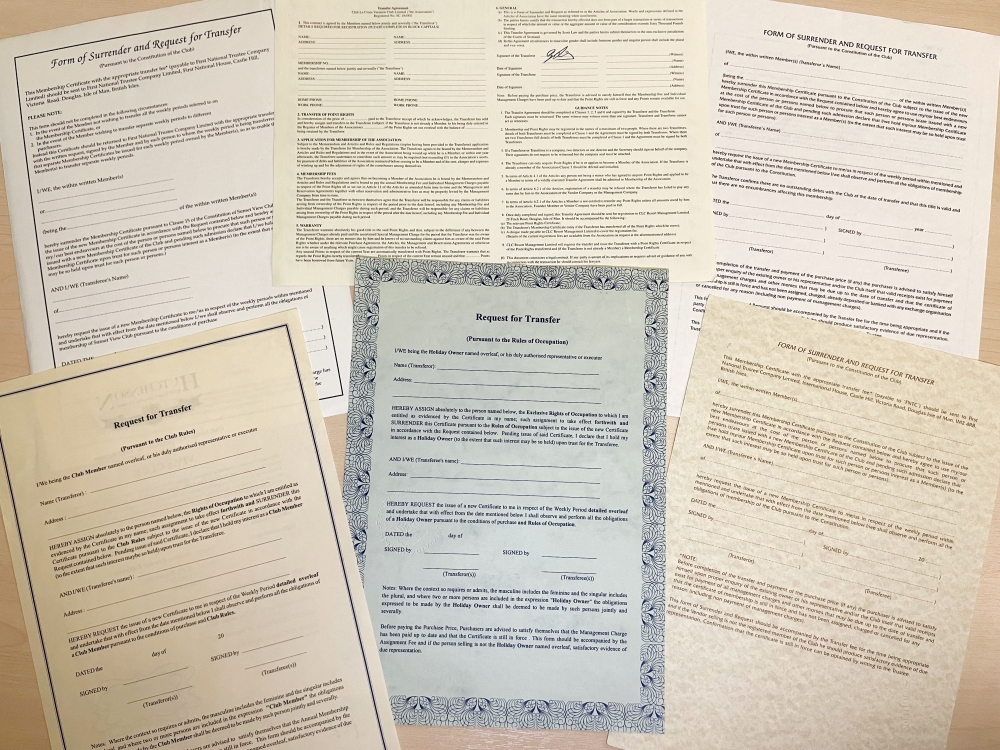
Primarily, the certificate indicates who the owner is and what they own, lists the responsible founders and resort management companies, and refers to legal documents (Statute or Membership Rules).
In most cases, the certificate is also the unique document used to transfer rights to another person and serves as the basis for changing timeshare ownership.
Is a timeshare always confirmed by a certificate?
The form of ownership confirmation as a certificate is used in several European countries, including the UK, Spain, Cyprus, Malta, and others.
However, other forms of timeshare ownership exist.
In countries such as France, Italy, Austria, Switzerland, and partly Spain, timeshare is considered a form of real estate. In these cases, ownership is notarized based on a deed and recorded in the public registry.
In Germany, Finland, Sweden, and other countries, timeshare is legally structured as ownership of shares in the resort’s development company. The registry is managed by a state body controlling corporate ownership, and transfers occur there.
In the USA, the Dominican Republic, and several Caribbean and Latin American countries, timeshare is considered a long-term lease agreement in a hotel complex. No ownership certificate is issued; the purchase contract itself is the legal proof of ownership.
Who issues the timeshare certificate?
The most common form of ownership among our clients is the timeshare certificate. In countries with established timeshare legislation, maintaining member registries, issuing certificates, and transferring ownership is delegated to an independent entity with no financial interest in selling timeshares.
In most cases, this role is performed by the resort Trustee, often an independent trust company. Over the years, two major trusts – FNTC (First National Trust Company) and Hutchinson Trust Company – have emerged as leaders, managing the security and registries of over 600 European resorts.
How is ownership usually transferred from seller to buyer?
The back of the certificate, which confirms timeshare ownership, serves as the Transfer Deed. It names the original owner and the new owner. Date and signatures of all parties are mandatory.
All co-owners must sign to express consent to the sale (up to 4 people). Without even one signature, the transaction cannot proceed.
After signing, the certificate is sent to the Trustee, who verifies names, addresses, and signatures against the original registry. If any doubt arises, the Trustee contacts the owners to confirm the transaction.
Next, the Trustee checks for debts or encumbrances that might prevent the sale. Once confirmed, ownership is transferred to the new owners, and a new certificate is issued confirming ownership, including for timeshares with floating weeks or point systems.
How is ownership transferred if the certificate is lost?
If the original certificate is lost, it must be reported to the Trustee. A duplicate can be requested, but if selling or transferring ownership, it is not required.
The Trustee sends a special document: “Declaration of Lost Certificate and Simultaneous Transfer Deed.” It includes the transfer section of the certificate where signatures are placed. The owner first declares that the original certificate is lost, not sold, and not pledged, taking full legal and financial responsibility for false information.
By signing this document, the owner confirms the loss and requests the transfer. The cost is the same as a standard transfer using the original certificate.
How long does ownership transfer take?
Typically 4–6 weeks, including mailing. Delays can occur due to complexity, debts, missing signatures, holidays, or timing with the annual membership fee.
The process can be significantly accelerated by using specialists whose services are affordable but provide efficient monitoring.
Are expensive certificate valuations necessary?
Certificate valuation may theoretically be needed by the buyer. Today, most buyers rely on their own research, comparing offers online. Valuation is mainly requested for legal proceedings or inheritance division.


